Introduction
Systemic lupus erythematosus (SLE), commonly called lupus, is a chronic autoimmune disease in which the immune system attacks healthy tissues. It can affect the joints, skin, kidneys, blood cells, lungs, heart, and nervous system. Symptoms may range from mild fatigue and joint pain to severe inflammation requiring hospitalization.
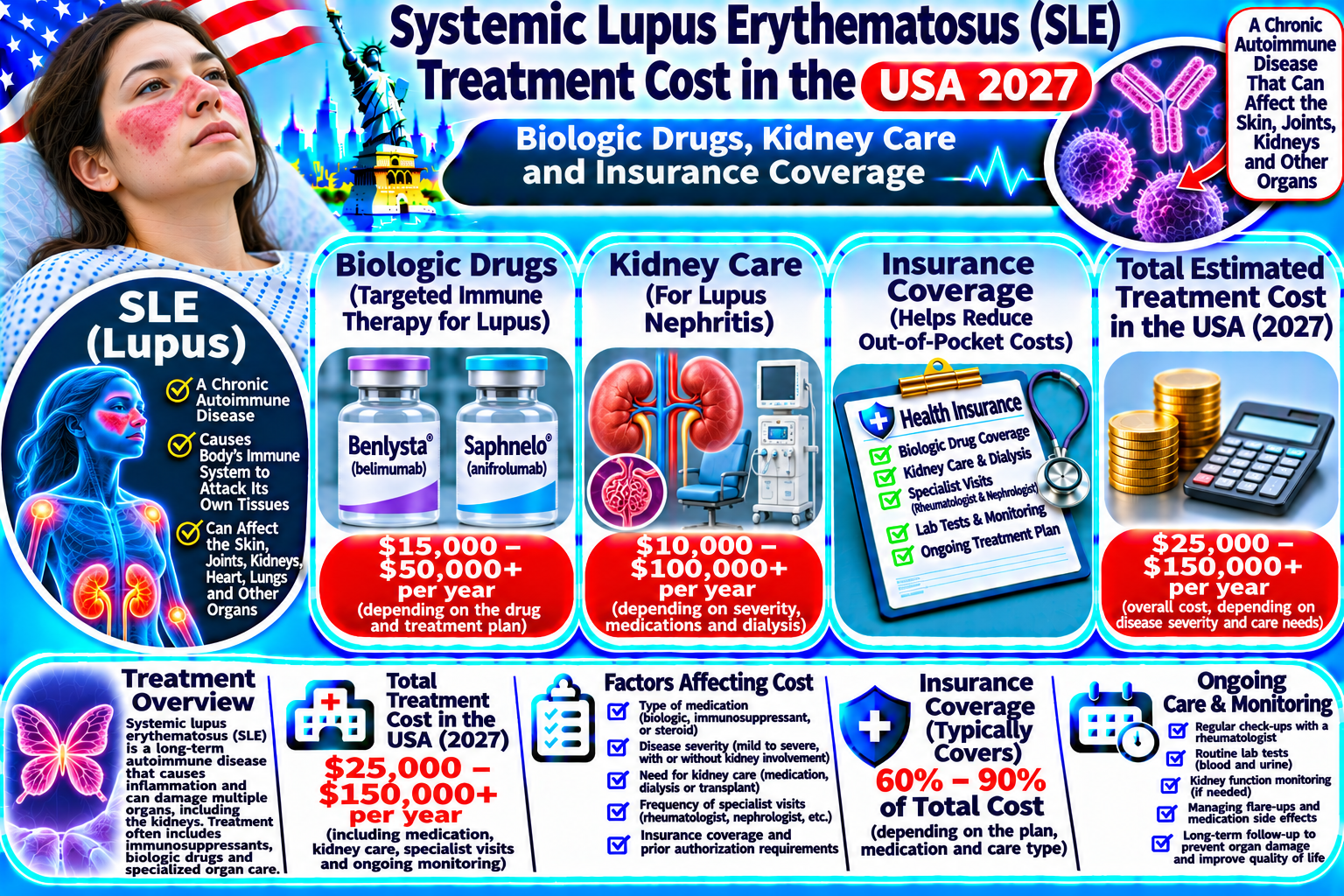
Understanding systemic lupus erythematosus treatment costs in the USA in 2027 is important for patients comparing biologic medications, immunosuppressive drugs, kidney care, specialist fees, and health insurance coverage.
Some patients manage lupus with affordable generic medications and routine monitoring. Others require expensive biologic injections, infusion therapy, kidney biopsies, or intensive hospital treatment.
This guide explains estimated American lupus treatment expenses for 2027, including diagnostic testing, medications, lupus nephritis treatment, hospital services, and insurance benefits.
What Is Systemic Lupus Erythematosus?
SLE is an autoimmune condition that causes inflammation and tissue damage when the immune system mistakenly targets the body’s own cells.
The disease can follow an unpredictable course, with periods of increased activity known as flares and periods of reduced symptoms or remission.
Its exact cause is not fully understood. Genetic susceptibility, hormonal factors, environmental triggers, and immune system abnormalities may contribute to disease development.
Early diagnosis and appropriate treatment help reduce inflammation, prevent organ damage, and improve long-term outcomes.
Common Symptoms of Lupus
- Persistent fatigue and weakness.
- Joint pain, swelling, and stiffness.
- Butterfly-shaped facial rash.
- Increased sensitivity to sunlight.
- Unexplained fever.
- Hair thinning or hair loss.
- Mouth or nasal ulcers.
- Chest discomfort during breathing.
- Swelling in the legs from kidney involvement.
- Blood cell abnormalities.
Symptoms differ considerably between patients. Some experience mainly skin and joint problems, while others develop serious organ complications.
How Is Lupus Diagnosed?
Antinuclear Antibody Testing
ANA testing helps identify autoimmune activity. A positive ANA result alone does not establish a lupus diagnosis.
Additional Antibody Testing
Anti-double-stranded DNA, anti-Smith, and other antibody tests may support diagnosis and disease assessment.
Complement Testing
Complement proteins such as C3 and C4 may help clinicians evaluate immune activity and monitor selected patients.
Kidney Function Testing
Blood creatinine, estimated glomerular filtration rate, urinalysis, and urine protein measurements help identify possible lupus nephritis.
Kidney Biopsy
A kidney biopsy may be recommended when lupus-related kidney inflammation is suspected. It helps classify disease severity and guide treatment.
Lupus Treatment Options
Hydroxychloroquine
Hydroxychloroquine is a commonly recommended foundational treatment for lupus unless contraindicated. It helps reduce disease activity and prevent flares.
Corticosteroids
Prednisone and methylprednisolone may control inflammation during active disease. Clinicians generally aim to minimize long-term steroid exposure because of potential complications.
Immunosuppressive Medications
Mycophenolate, azathioprine, methotrexate, and cyclophosphamide may be prescribed according to disease severity and organ involvement.
Biologic Drugs
Belimumab, marketed as Benlysta, and anifrolumab, marketed as Saphnelo, are biologic treatments for eligible patients with systemic lupus erythematosus.
Belimumab is also approved for active lupus nephritis in patients meeting its prescribing criteria.
Lupus Nephritis Treatment
Kidney involvement may require combinations of glucocorticoids, mycophenolate, biologic agents, or calcineurin inhibitors such as voclosporin.
Obinutuzumab, marketed as Gazyva, is another treatment option for eligible adults with active lupus nephritis.
Systemic Lupus Erythematosus Treatment Cost in the USA in 2027
Lupus treatment expenses depend on disease severity, medication selection, specialist visits, kidney involvement, hospital utilization, and insurance benefits.
Generic medications may be relatively affordable, while biologic therapies and kidney complications can substantially increase annual costs.
The following figures are illustrative 2027 budgeting estimates, not verified future prices, national averages, or actual insurance-adjusted patient payments.
Estimated USA Lupus Treatment Cost Breakdown
| Treatment or Service | Estimated Cost (USD) |
|---|---|
| Rheumatologist Consultation | $200–$800 per visit |
| Autoimmune Blood Test Panel | $150–$1,000+ |
| Kidney Function and Urine Testing | $100–$600 per episode |
| Kidney Biopsy | $3,000–$12,000+ |
| Generic Hydroxychloroquine | $10–$100+ monthly |
| Generic Corticosteroids | $5–$100+ monthly |
| Mycophenolate or Azathioprine | $30–$500+ monthly |
| Benlysta Biologic Therapy | $35,000–$85,000+ annually |
| Saphnelo Infusion Therapy | $45,000–$100,000+ annually |
| Lupkynis (Voclosporin) | $70,000–$150,000+ annually |
| Biologic Infusion Administration | $300–$2,000+ per visit |
| Hospitalization for Severe Flare | $10,000–$70,000+ |
| Dialysis if Kidney Failure Develops | $50,000–$120,000+ annually |
Important: These hypothetical ranges are for financial planning only. Infusion administration fees may already be included in bundled treatment quotations. Dialysis is necessary only for patients who develop kidney failure requiring renal replacement therapy.
USA Lupus Annual Treatment Cost Comparison
Because this article focuses on the United States, the following table compares American treatment scenarios rather than international countries.
| USA Treatment Scenario | Illustrative Annual Budget |
|---|---|
| Mild Lupus With Generic Medication | $1,000–$6,000+ |
| Moderate Lupus With Specialist Monitoring | $3,000–$15,000+ |
| Lupus With Biologic Treatment | $40,000–$120,000+ |
| Active Lupus Nephritis With Specialty Therapy | $20,000–$180,000+ |
| Severe Disease With Kidney Failure | Highly individualized |
These scenarios are illustrative rather than standardized medical packages. Some treatment expenses overlap, and not every patient requires biologic therapy or kidney treatment.
Biologic Drug Costs for Lupus
Biologic medications target specific immune system pathways involved in lupus inflammation. They may be recommended when conventional treatment does not provide adequate disease control.
Biologic drugs are generally more expensive than generic medications. Their total cost depends on dosage, treatment frequency, administration setting, insurance contracts, and specialist monitoring.
Patients should compare the full treatment expense rather than the medication price alone.
Benlysta Treatment Expenses
Benlysta contains belimumab, a biologic medication that reduces the activity of B-lymphocyte stimulator, a protein involved in abnormal immune responses.
It is available in intravenous and subcutaneous formulations. The appropriate administration schedule depends on the prescribed formulation and patient characteristics.
Benlysta may be used alongside standard therapy for eligible patients with active systemic lupus erythematosus or lupus nephritis.
Expenses may include medication, infusion administration, laboratory monitoring, and specialist consultations.
Saphnelo Infusion Costs
Saphnelo contains anifrolumab, a monoclonal antibody that blocks type I interferon receptor signaling.
It is used for eligible adults with moderate to severe systemic lupus erythematosus receiving standard treatment.
Intravenous treatment is commonly administered every four weeks. The total annual expense depends on medication pricing and infusion facility charges.
Potential adverse effects include infections and infusion-related reactions. Patients require appropriate clinical assessment before and during treatment.
Lupus Nephritis and Kidney Care Costs
Lupus nephritis develops when lupus causes inflammation in the kidneys. It may lead to protein leakage into urine, high blood pressure, reduced kidney function, and potentially permanent kidney damage.
Early detection and treatment are important for protecting kidney function.
Patients may require nephrologist consultations, kidney biopsies, urine protein testing, and repeated laboratory monitoring.
Treatment often combines several medications rather than relying on a single drug.
Lupkynis Medication Expenses
Lupkynis contains voclosporin, an oral calcineurin inhibitor approved for adults with active lupus nephritis in combination with background immunosuppressive treatment.
It helps control immune activity and reduce kidney inflammation.
Patients require monitoring of kidney function, blood pressure, and medication safety. The drug also carries warnings concerning serious infections and malignancies.
Insurance authorization is particularly important because annual medication expenses can be substantial.
Kidney Biopsy and Hospital Expenses
A kidney biopsy helps determine the type and severity of lupus nephritis, allowing clinicians to select an appropriate treatment strategy.
Biopsy expenses may include imaging guidance, pathology evaluation, procedural fees, and observation.
Severe lupus flares can require hospitalization for intravenous medications, fluid management, infection evaluation, and intensive monitoring.
Patients with advanced kidney failure may need dialysis or kidney transplantation, creating additional long-term healthcare expenses.
Hydroxychloroquine and Generic Medication Costs
Hydroxychloroquine is an important foundational treatment for many patients with lupus. It can reduce flare frequency and help control symptoms.
Generic hydroxychloroquine is generally much less expensive than biologic therapy.
Patients taking hydroxychloroquine require appropriate eye screening because prolonged exposure can cause retinal toxicity.
Other generic medications, including prednisone, azathioprine, and mycophenolate, may be used according to clinical needs.
Lupus Treatment With Health Insurance
Many comprehensive American health insurance plans cover medically necessary lupus treatment, including specialist appointments, laboratory testing, prescription medications, and eligible biologic therapies.
However, expensive medications frequently require prior authorization and documentation of treatment necessity.
Important insurance considerations include:
- Annual deductible and out-of-pocket maximum.
- Prescription drug formulary coverage.
- Biologic medication authorization.
- Infusion center network participation.
- Kidney biopsy and nephrology benefits.
- Specialty pharmacy requirements.
- Hospitalization coverage.
- Copayments and coinsurance.
Patients should verify whether biologic medications are covered under their medical benefit or prescription drug benefit because billing arrangements may differ.
Medicare and Medicaid Coverage
Medicare may cover qualifying lupus treatment for eligible beneficiaries under applicable medical necessity and benefit rules.
Medicare Part B may cover certain outpatient services and physician-administered medications, while Part D may cover eligible prescription drugs.
Medicaid may provide coverage for eligible individuals, although medication formularies and authorization requirements vary by state.
Factors Influencing Lupus Treatment Prices
1. Disease Severity
Patients with mild skin and joint symptoms may require fewer medical resources than those with severe kidney or neurological involvement.
2. Medication Selection
Generic medications, biologic injections, and specialty kidney treatments have substantially different costs.
3. Hospital and Infusion Setting
Hospital outpatient departments, independent infusion centers, and other treatment facilities may charge different amounts.
4. Insurance Coverage
Deductibles, copayments, negotiated rates, and prior authorization rules affect patient financial responsibility.
5. Kidney Complications
Lupus nephritis may require additional testing, medications, hospitalization, and kidney replacement treatment in severe cases.
6. Geographic Location
Specialist fees, hospital charges, and pharmacy prices vary across American states and healthcare systems.
How to Reduce Lupus Treatment Costs
- Verify insurance coverage before starting biologic therapy.
- Ask about appropriate generic medication options.
- Use participating rheumatologists and nephrologists.
- Compare covered infusion facilities.
- Review manufacturer patient assistance programs.
- Request written medication cost estimates.
- Explore Medicare or Medicaid eligibility.
- Consult a hospital financial counselor.
Patients should not discontinue prescribed lupus medications or change doses without consulting their healthcare team.
Frequently Asked Questions
How much does lupus treatment cost in the USA in 2027?
Illustrative annual expenses may range from a few thousand dollars for mild disease to more than $100,000 for patients requiring expensive biologic treatment and complex kidney care.
Are biologic drugs expensive?
Yes. Benlysta and Saphnelo can cost tens of thousands of dollars annually before insurance adjustments.
Does insurance cover lupus nephritis treatment?
Many comprehensive plans cover medically necessary kidney treatment, but specialty medications and procedures may require prior authorization.
Can lupus damage the kidneys?
Yes. Lupus nephritis can cause kidney inflammation and, in severe cases, permanent kidney damage or kidney failure.
Can systemic lupus erythematosus be cured?
There is currently no established universal cure. Treatment aims to control disease activity, prevent flares, and reduce organ damage.
Is lifelong monitoring necessary?
Ongoing medical monitoring is generally important because lupus activity and organ involvement can change over time.
Conclusion
Systemic lupus erythematosus treatment costs in the USA in 2027 depend on biologic drugs, generic medications, kidney care, specialist consultations, hospital expenses, and health insurance coverage.
Patients should compare complete treatment estimates, verify insurance benefits, and work closely with experienced rheumatologists and nephrologists.
Early diagnosis, appropriate medication, regular monitoring, and careful financial planning can help patients manage the long-term healthcare expenses associated with lupus.
Medical Disclaimer: This article provides general educational and financial planning information only. It does not replace professional medical advice, diagnosis, or treatment. All 2027 cost ranges are illustrative estimates and should be verified directly with healthcare providers, pharmacies, hospitals, and insurance companies.
