Introduction
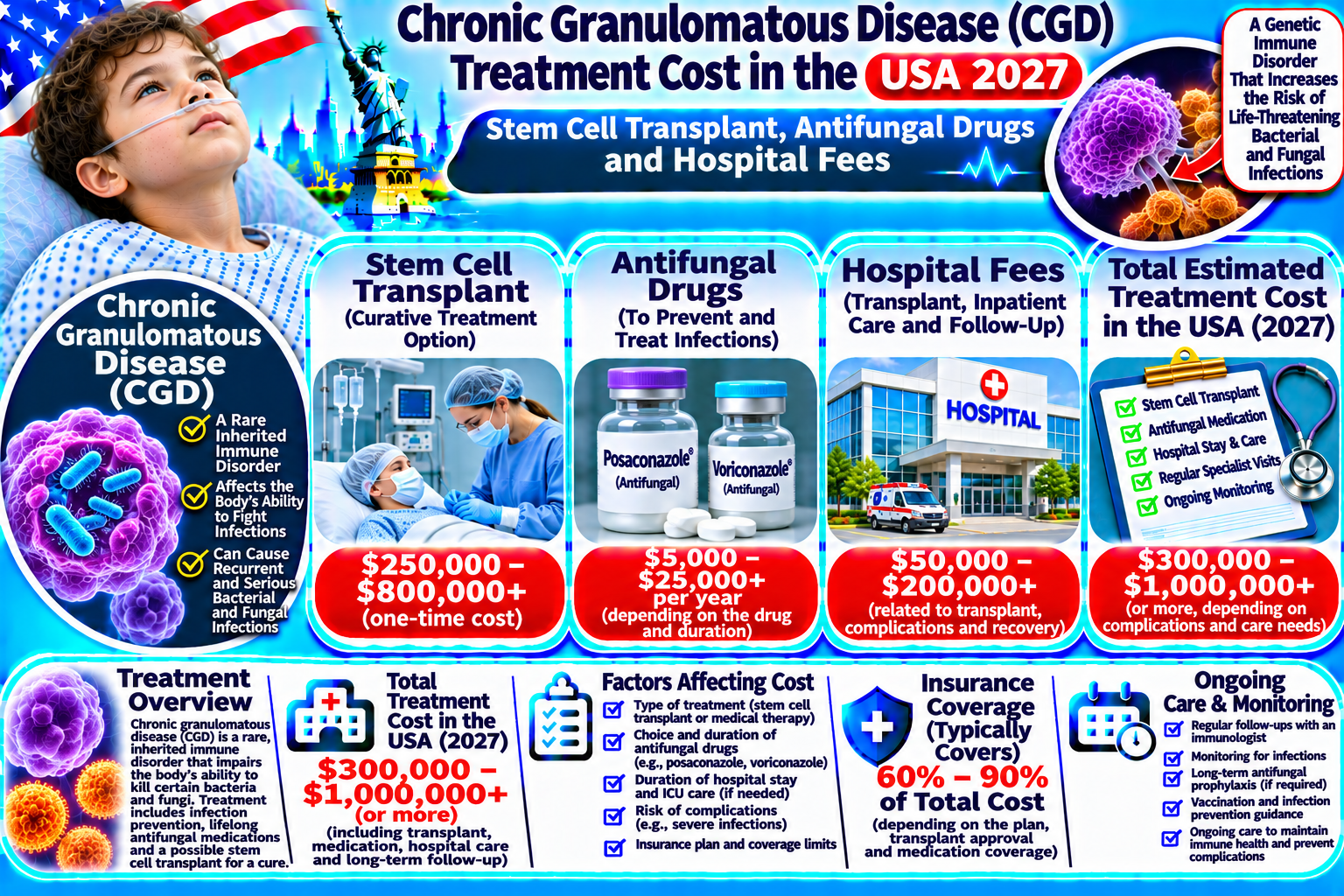
Chronic granulomatous disease (CGD) is a rare inherited immune system disorder that reduces the body’s ability to fight certain bacterial and fungal infections. Patients may experience repeated infections, inflammatory complications, and prolonged hospital treatment. Modern preventive medications and specialized medical care have improved outcomes, while hematopoietic stem cell transplantation offers the possibility of a cure for selected patients.
Understanding chronic granulomatous disease treatment costs in the USA in 2027 is important for families comparing stem cell transplantation, antifungal medications, antibiotic prophylaxis, interferon-gamma injections, hospital expenses, and health insurance coverage.
Routine treatment can involve ongoing prescription medications and specialist monitoring. Severe infections or transplantation may create much larger medical expenses.
This guide examines estimated American CGD treatment costs for 2027, including diagnostic testing, preventive medication, hospital care, transplantation, and insurance considerations.
What Is Chronic Granulomatous Disease?
CGD is an inherited primary immunodeficiency caused by genetic changes affecting the NADPH oxidase system in certain immune cells.
These cells normally produce reactive oxygen species that help destroy specific microorganisms. When this process does not function properly, patients become more vulnerable to certain infections.
CGD may follow X-linked or autosomal recessive inheritance patterns. Disease severity varies depending on the underlying genetic variant and residual immune function.
Patients often require coordinated care from immunologists, infectious disease specialists, and other healthcare professionals.
Common Symptoms of CGD
- Recurring bacterial infections.
- Serious fungal infections.
- Pneumonia and lung abscesses.
- Skin and soft tissue infections.
- Swollen or infected lymph nodes.
- Liver abscesses.
- Persistent fever.
- Inflammatory bowel symptoms.
- Poor growth in some children.
- Granuloma formation causing inflammation or obstruction.
Symptoms can begin in childhood, although some individuals are diagnosed later in life.
How Is Chronic Granulomatous Disease Diagnosed?
Dihydrorhodamine Flow Cytometry Test
The dihydrorhodamine (DHR) test evaluates the oxidative burst function of neutrophils and is commonly used to diagnose CGD.
Genetic Testing
Genetic testing can identify disease-causing variants, support family counseling, and help determine inheritance patterns.
Immune System Evaluation
Additional laboratory testing may be performed to assess immune function and investigate other possible disorders.
Infection Testing
Blood cultures, respiratory cultures, imaging, and sometimes tissue biopsies help identify infections and guide treatment.
Specialist Assessment
Clinical immunologists evaluate infection history, laboratory results, family history, and potential complications.
Chronic Granulomatous Disease Treatment Options
Preventive Antibiotics
Long-term antibacterial prophylaxis, commonly with trimethoprim-sulfamethoxazole when appropriate, helps reduce the risk of serious bacterial infections.
Antifungal Medications
Antifungal prophylaxis is an important part of CGD management. Itraconazole is a commonly used option, while other antifungal agents may be selected according to clinical circumstances.
Interferon-Gamma Therapy
Interferon gamma-1b, marketed as Actimmune, may be prescribed to reduce the frequency of serious infections in eligible patients.
Stem Cell Transplantation
Allogeneic hematopoietic stem cell transplantation replaces the patient’s defective blood-forming immune system with donor-derived cells and may provide a cure.
Treatment of Active Infections
Serious bacterial or fungal infections may require intravenous medications, prolonged treatment, drainage procedures, or hospitalization.
Inflammation Management
Some patients develop inflammatory complications requiring carefully selected treatments under specialist supervision.
Chronic Granulomatous Disease Treatment Cost in the USA in 2027
CGD treatment expenses depend on infection frequency, medication selection, hospital utilization, transplant eligibility, and insurance benefits.
Preventive treatment may be relatively manageable compared with the costs of severe infections or stem cell transplantation.
The following amounts are illustrative 2027 budgeting estimates, not confirmed future prices, national averages, or guaranteed patient payments.
Estimated USA Treatment Cost Breakdown
| Treatment or Service | Estimated Cost (USD) |
|---|---|
| Immunologist Consultation | $200–$800 per visit |
| DHR Diagnostic Testing | $300–$1,500+ |
| Genetic Testing | $500–$4,000+ |
| Preventive Antibiotics | $10–$150+ monthly |
| Oral Antifungal Prophylaxis | $50–$1,500+ monthly |
| Interferon Gamma-1b | $10,000–$40,000+ monthly |
| Hospital Treatment for Infection | $10,000–$100,000+ per admission |
| Intravenous Antifungal Treatment | $5,000–$50,000+ per course |
| Stem Cell Transplantation | $250,000–$900,000+ per transplant episode |
| Post-Transplant Monitoring | $10,000–$100,000+ during the first year |
Important: These broad ranges are hypothetical planning figures. Hospital infection treatment may already include intravenous medication expenses, and transplant quotations may include some follow-up services. Avoid double-counting overlapping charges.
USA CGD Annual Treatment Cost Comparison
Because this article focuses on the United States, the following table compares American treatment scenarios rather than different countries.
| USA Treatment Scenario | Illustrative Budget |
|---|---|
| Stable CGD With Preventive Medication | $2,000–$20,000+ annually |
| CGD With Interferon-Gamma Therapy | $120,000–$500,000+ annually |
| CGD With Serious Infection | $20,000–$150,000+ during treatment year |
| Stem Cell Transplant Treatment Year | $300,000–$1 million+ during transplant year |
These examples are not standardized treatment packages. Individual costs can be substantially lower or higher, depending on clinical circumstances and insurance arrangements.
Stem Cell Transplantation Costs for CGD
Allogeneic hematopoietic stem cell transplantation is an established potentially curative treatment for chronic granulomatous disease. It replaces defective blood-forming cells with healthy donor-derived cells capable of producing functional immune cells.
The procedure requires careful evaluation of donor compatibility, existing infections, organ function, and the patient’s overall health.
Transplantation expenses may include donor searches, stem cell collection, conditioning chemotherapy, hospital admission, transfusions, and prolonged monitoring.
Although transplantation involves substantial upfront expenses, successful treatment may reduce the need for lifelong infection prophylaxis and repeated hospitalizations.
Hospital Fees During Stem Cell Transplantation
Stem cell transplantation requires specialized hospital facilities and experienced transplant teams. The length of hospitalization varies according to treatment response and complications.
Common expenses include:
- Transplant specialist consultations.
- Donor identification and compatibility testing.
- Stem cell collection and processing.
- Conditioning chemotherapy.
- Hospital room and nursing services.
- Blood transfusions and supportive medications.
- Infection prevention and treatment.
- Post-transplant laboratory monitoring.
Potential complications include graft-versus-host disease, graft failure, and severe infections. These complications can significantly increase expenses and may require additional hospitalization.
Antifungal Medication Costs
Antifungal prophylaxis is a central component of CGD management because patients face an increased risk of serious fungal infections, particularly those caused by Aspergillus species.
Itraconazole is commonly prescribed for prevention. Posaconazole or voriconazole may be considered in selected situations.
Medication costs depend on the drug, formulation, dosage, insurance coverage, and treatment duration.
Patients may require liver function testing and antifungal drug-level monitoring to evaluate treatment effectiveness and safety.
Antibiotic Prophylaxis Expenses
Preventive antibiotics reduce the risk of bacterial infections in patients with CGD.
Trimethoprim-sulfamethoxazole is commonly used when tolerated. Alternative medications may be needed for patients with allergies or adverse reactions.
Generic antibiotics are often relatively inexpensive, but ongoing prescription expenses and laboratory monitoring can accumulate over time.
Preventive treatment should follow an individualized plan developed by an immunologist or infectious disease specialist.
Interferon-Gamma Injection Costs
Interferon gamma-1b is an injectable medication used to reduce the frequency and severity of serious infections in selected patients with CGD.
It is generally administered through subcutaneous injections several times weekly.
The medication can be expensive because it is a specialized biologic treatment. Actual annual expenses depend on body size, prescribed dosage, pharmacy contracts, and insurance coverage.
Its use should be individualized because the additional benefit alongside modern antimicrobial prophylaxis remains an area of clinical discussion.
Hospital Treatment for Serious Infections
Despite preventive medications, patients with CGD may develop serious infections requiring urgent medical attention.
Hospital care may include intravenous antibiotics, antifungal medications, diagnostic imaging, drainage procedures, and specialist consultations.
Severe pneumonia, liver abscesses, or invasive fungal infections may require prolonged treatment.
Hospital expenses vary significantly according to infection severity, length of stay, and intensive care requirements.
Long-Term Monitoring Expenses
Patients who do not undergo curative transplantation generally require ongoing medical follow-up.
Routine care may include:
- Immunologist consultations.
- Blood counts and liver function tests.
- Medication safety monitoring.
- Antifungal drug-level measurements.
- Evaluation of new infections.
- Imaging when clinically necessary.
- Assessment of inflammatory complications.
After transplantation, additional testing evaluates immune recovery, donor cell engraftment, and possible complications.
CGD Treatment With Health Insurance
Many comprehensive American health insurance plans cover medically necessary CGD services, including specialist consultations, diagnostic testing, prescription medications, hospital treatment, and eligible stem cell transplantation.
However, expensive medications and transplant procedures often require prior authorization and detailed clinical documentation.
Important insurance considerations include:
- Annual deductible and out-of-pocket maximum.
- Specialty medication formulary coverage.
- Transplant center network participation.
- Donor search and collection benefits.
- Antifungal medication coverage.
- Interferon-gamma authorization.
- Hospitalization and intensive care benefits.
- Post-transplant follow-up coverage.
Patients should request a written explanation of covered services and expected cost-sharing before major procedures whenever possible.
Medicare and Medicaid Coverage
Medicare may cover qualifying CGD treatment for eligible beneficiaries under applicable medical necessity and benefit rules.
Medicare Part A may cover eligible inpatient hospital services, while Part B may cover certain outpatient services.
Medicare Part D may cover eligible prescription medications according to plan rules.
Medicaid and the Children’s Health Insurance Program may provide important coverage for eligible patients, although benefits vary by state.
Factors Influencing CGD Treatment Prices
1. Disease Severity
Patients with frequent infections or inflammatory complications may require more medical services than those with stable disease.
2. Medication Selection
Generic antibiotics, antifungal drugs, and interferon-gamma injections have different pricing structures.
3. Stem Cell Donor Availability
Donor identification, compatibility testing, and transplant complexity influence overall treatment expenses.
4. Hospital Location
Specialized transplant centers and hospitals may have different charges and negotiated insurance rates.
5. Insurance Coverage
Deductibles, prior authorization, network restrictions, and cost-sharing requirements affect patient financial responsibility.
6. Treatment Complications
Severe infections, graft-versus-host disease, or additional hospitalization can substantially increase expenses.
How to Reduce CGD Treatment Costs
- Verify insurance benefits before expensive treatment.
- Use participating immunologists and transplant centers.
- Ask about appropriate generic medication options.
- Review specialty pharmacy requirements.
- Request detailed transplant cost estimates.
- Explore manufacturer patient assistance programs.
- Review Medicaid or other public insurance eligibility.
- Consult hospital financial counselors.
Patients should never stop preventive antibiotics or antifungal medications without guidance from their treating specialist.
Frequently Asked Questions
How much does CGD treatment cost in the USA in 2027?
Illustrative annual expenses may range from a few thousand dollars for preventive treatment to hundreds of thousands of dollars when expensive biologic therapy or stem cell transplantation is required.
How expensive is stem cell transplantation for CGD?
A transplant treatment episode may involve several hundred thousand dollars in gross medical expenses, depending on hospital services, donor arrangements, and complications.
Are antifungal medications necessary?
Antifungal prophylaxis is recommended for many patients with CGD because of their elevated risk of serious fungal infections.
Does insurance cover stem cell transplantation?
Many comprehensive insurance plans cover medically necessary transplantation for eligible patients, subject to authorization and network requirements.
Can chronic granulomatous disease be cured?
Allogeneic stem cell transplantation can provide a cure for selected patients. Gene therapy remains investigational rather than an established routine treatment.
Is lifelong monitoring required?
Patients generally require ongoing specialist monitoring. Follow-up needs may change after successful transplantation.
Conclusion
Chronic granulomatous disease treatment costs in the USA in 2027 depend on stem cell transplantation, antifungal medications, preventive antibiotics, interferon-gamma injections, hospital expenses, and insurance coverage.
Patients and families should compare complete treatment estimates, verify insurance benefits, and work closely with experienced immunologists and transplant specialists.
Early diagnosis, consistent infection prevention, timely treatment, and careful financial planning can help reduce complications and manage the long-term healthcare expenses associated with CGD.
Medical Disclaimer: This article provides general educational and financial planning information only. It does not replace professional medical advice, diagnosis, or treatment. All 2027 cost ranges are illustrative estimates and should be verified directly with healthcare providers, pharmacies, hospitals, and insurance companies.
